
Fourth Tokyo Peace Roundtable Held under the Tokyo Peace Process Dialogue Focuses on “Peace, Human Dignity, and Shared Responsibility”
On October 13–14, 2026, religious leaders and youth from diverse religious traditions who have been severely affected by conflicts gathered in Chiba City, Chiba Prefecture, Japan, for the Fourth Tokyo Peace Roundtable on the theme of “Peace, Human Dignity, and Shared Responsibility.”
In 2022, in response to the war in Ukraine, Religions for Peace Japan convened the first Tokyo Peace Roundtable, bringing together religious leaders from countries involved in the conflict to explore pathways to ending the war and pursuing reconciliations. The second and third Roundtables were subsequently held in 2024 and 2025, respectively. This year’s meeting was held as part of the Tokyo Peace Process, an ongoing initiative by religious leaders to promote peace and reconciliation, as outlined in the declaration adopted at the Third Tokyo Peace Roundtable last year.
The meeting brought together 100 participants from 12 countries and regions: Ukraine, Russia, Palestine, Israel, Iran, the United States, Jordan, Kenya, Türkiye, Nepal, South Korea, and Japan.
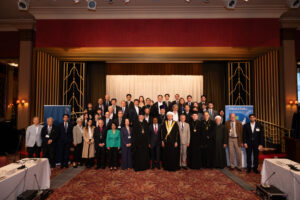
The meeting featured sessions in which participants presented the conflicts facing their respective countries and regions. They also exchanged views on the responsibilities and roles of religious leaders in protecting human dignity, as well as concrete actions they could take to advance peace.
In addition, participants took part in three breakout groups focusing on the relationships between Ukraine and Russia, Palestine and Israel, and Iran and the United States. Discussions explored how religious leaders and communities could maintain channels of dialogue and communication across divisions caused by conflict, and what forms of dialogue could be pursued in practice.

Throughout the meeting, participants shared the challenges facing their respective communities, along with differing perspectives and understandings of the conflicts. They also acknowledged that conflicts undermine trust between countries, religious communities and ethnic groups opposing sides, making it increasingly difficult to sustain dialogue.
Participants emphasised that, rather than seeking to correct others, it is essential first to establish connections with one another, and that building relationships can itself contribute to improving the situation. Concerns were also raised about the misuse of religion during wartime, particularly when religious narratives are used to justify war.
Against this backdrop, discussions explored how hostility could be transformed through religious and ethical values that uphold the sanctity of life and human dignity, and what roles religious leaders could play in this process. Participants also shared the understanding that religious traditions have a vital role in safeguarding human dignity, respecting the identities and ways of life of those who are different from ourselves, and opening pathways toward peaceful coexistence.
Amid deepening divisions and distrust, practical ways to maintain connections with one another and facilitate communication were explored, leading to concrete proposals for future action. This marked an important step forward in advancing the Tokyo Peace Process.
Building on the small-group discussions, participants identified several potential initiatives, including holding regular online meetings, establishing platforms for information exchange, implementing dialogue and exchange projects involving Palestinian and Israeli young adults, and creating an interreligious dialogue organisation within Iran.
On the final day, participants unanimously adopted a declaration. Expressing deep concern over the growing suffering of people around the world, the declaration strongly affirmed that wars of aggression are unacceptable. It called on political leaders to lay down their arms, return immediately to the negotiating table, and bring an end to the conflicts.
The declaration also emphasised that “Restoring trust and dialogue is a prerequisite to achieving peace.”
The declaration further outlined future initiatives under the Tokyo Peace Process, reaffirming three commitments: first, to Sustain relationships and channels of communication even amid rising tensions and to build bridges that foster mutual understanding and reconciliation; second, to Advance dialogue in conflict-affected contexts, and to encourage action toward the realization of a just peace; and third, to Strengthen the role of women and youth in peace processes.
Read the Declaration:
English
Fourth Tokyo Peace Roundtable Official Statement_final
Japanese